In this guest blog, FAIRsharing Community Champion for RDM and Social Sciences and Humanities David Tomkins writes about database and standard curation, completed as part of his recent short-term contract with FAIRsharing.
Having been a FAIRsharing Community Champion for the Humanities and Social Sciences since 2023, I joined the FAIRsharing team as a Curator in February 2025 on a fixed-term appointment to comprehensively review and enhance content within the database and standards registries. While both registries required curation for the new research object type field, there was also registry-specific curation to do.
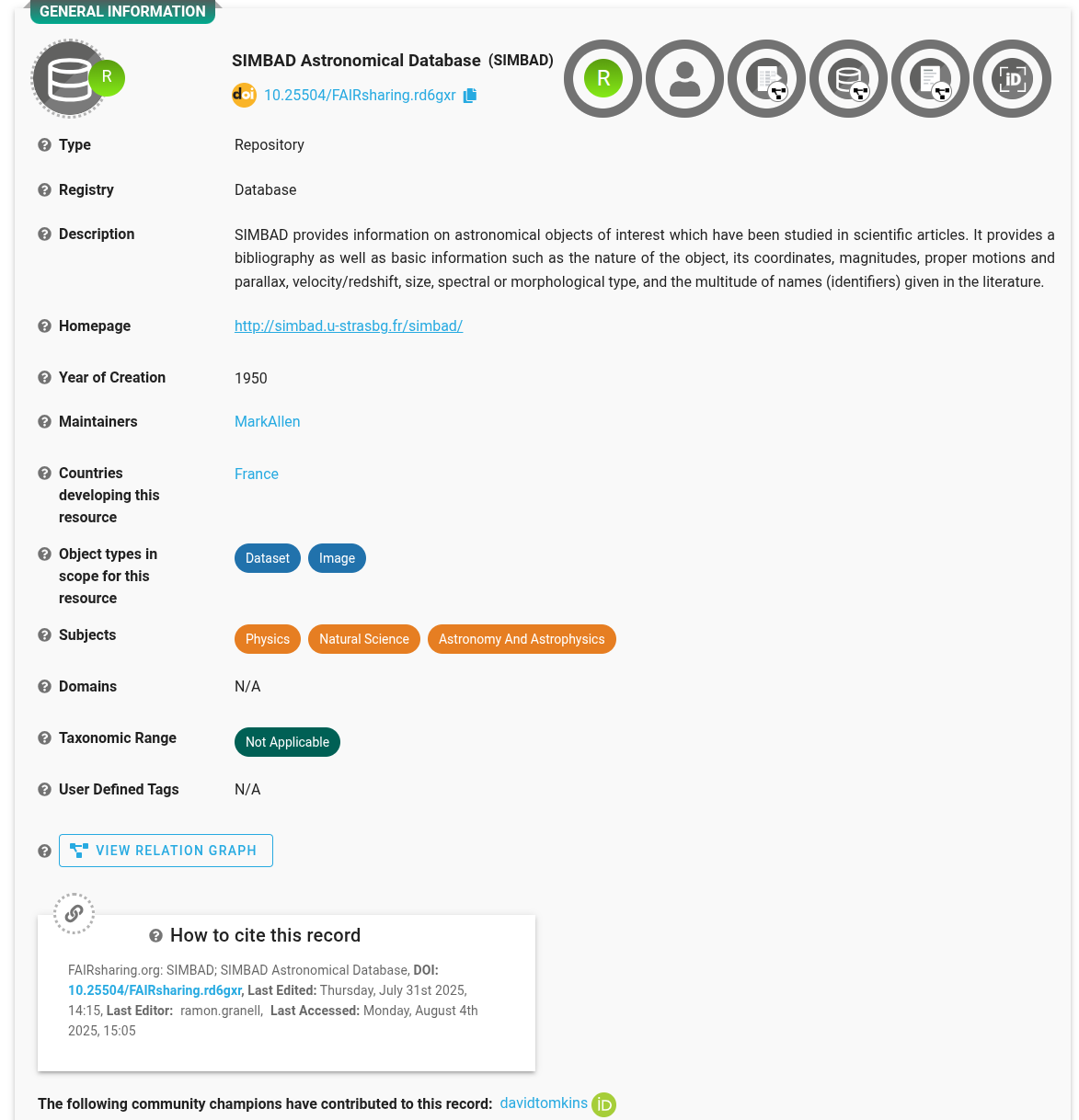
For databases, the main body of work was the retrospective curation of FAIRsharing’s database registry to provide 100% coverage of each repository’s identifier schemata. At the same time, I curated the research object type(s) that were in scope for each database record. This meant visiting the nearly 2000 non-deprecated database records and reviewing the type(s) of persistent identifiers used and research objects supported by each database, a massive undertaking.
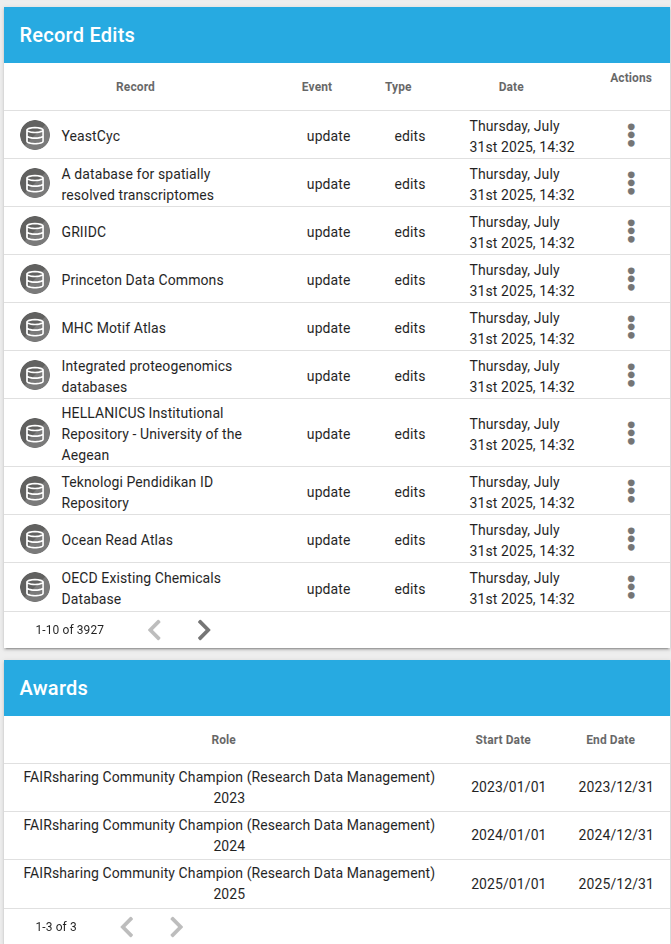
Upon completion of the database registry, I moved on to an audit of FAIRsharing’s standards registry. Again, this involved identification of research object types. Additionally, it also required a review of related standards, specifically the types of generic standard each community standard extended or implemented. In recent years, FAIRsharing had begun to improve its coverage of more generic standards to its registry (e.g. XML, CSV, JSON), and there was a backlog in terms of linking these generic standards to existing records. By the end of my contract, some 600 out of 1,600 records had been reviewed. A number of patterns had also begun to emerge to aid this large-scale curation; similar community-specific standard would often utilise the same generic standards. These have subsequently helped to inform improvements to the editing platform now that it has been opened up to the wider FAIRsharing community in order to complete the final curation within the standards registry.
My main takeaway from three thoroughly enjoyable months working with the (fabulous) FAIRsharing team? The sheer breadth, variety and, indeed, disparity of available information for resources listed in the registry, and the need for periodic review and ongoing curation to ensure that FAIRsharing remains as accurate, current and comprehensive as possible. Meanwhile, I very much look forward to continuing as an active member of the FAIRsharing Community Champions programme.
A note from the FAIRsharing Team: David joined us to take on a massive curation challenge. Every time we add a new field to our record schema, it’s not just future records that will use that field; every single one of the thousands of older records need re-curating with that new field. David has provided a targeted reviewed 1000s of records as part of this work, a huge challenge that he has been very successful with. Over the coming weeks, after performing some final checks against our production database, you’ll most likely be see his curation enter your record!